
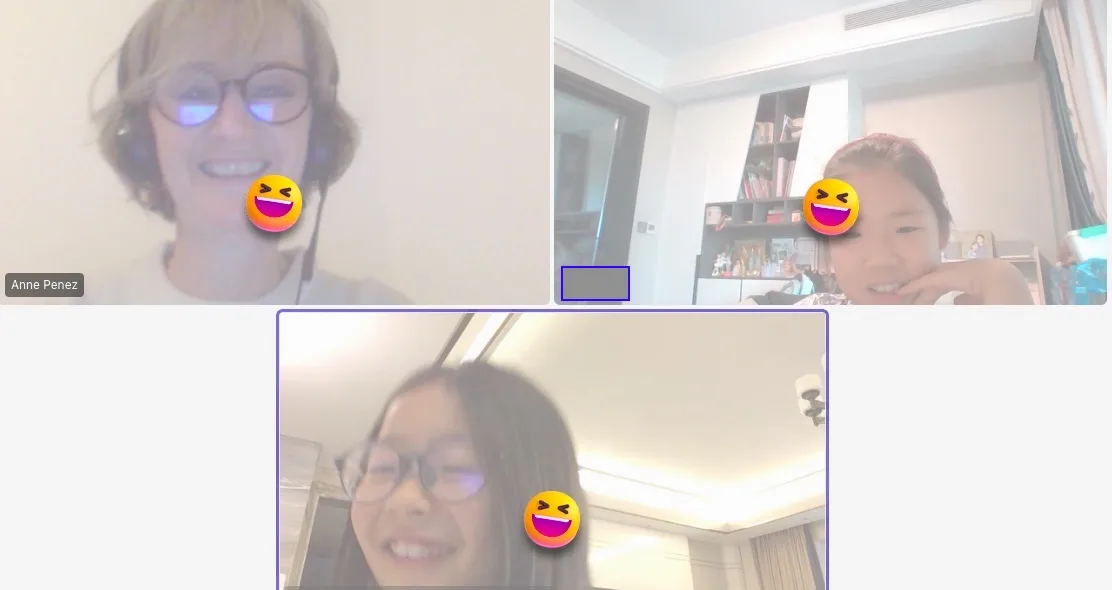
Parents often ask how to help their children stay motivated and focused during online French lessons. One powerful answer is simple: rituals for children when learning French. Far from being boring or repetitive, rituals create structure, build confidence, and help children learn more effectively.
Educators from Maria Montessori to Lev Vygotsky have emphasized the importance of rhythm, repetition and structure in childhood education. Today, neuroscience also confirms that repeated routines strengthen memory and learning pathways making language acquisition faster and more natural.
Fore more on playful language learning, check our article” Why fun learning is crucial in an online class for children?“
What are learning rituals in French class?
Rituals are small, repeated actions that give rhythm and predictability to learning. In an online French class, rituals might include:
🎵 starting each lesson with a greeting song
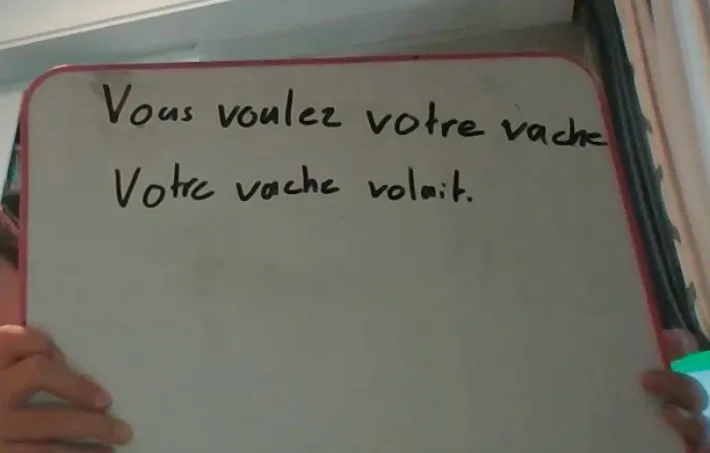
✍️ repeating a short rhyme or tongue twister
🖐️ using the same warm-up activity at the beginning
🎲 ending the lesson with a game.
These moments are not just habits. They are powerful learning tools that help children feel safe and ready to explore French confidently. Rituals can begin the class, occur in the middle or end the French lesson.
Why rituals for children matter in language learning
1. A sense of security
Maria Montessori observed: “Order is one of the needs of the child.”
Rituals create order, letting children know what to expect. This reduces anxiety and allows them to focus on learning French rather than worrying about what comes next. They know about the process of the class.
2. A stronger memory
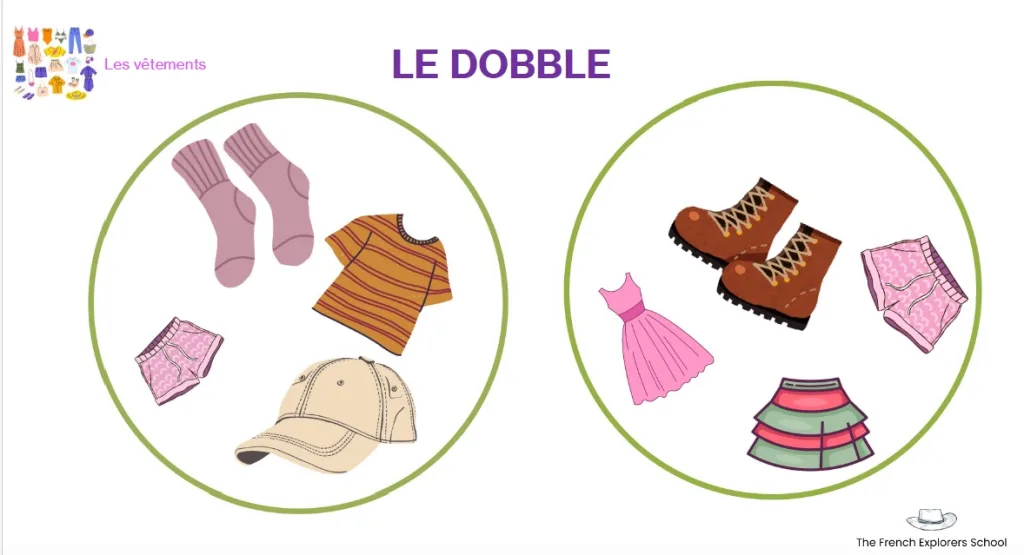
Neuroscience shows that repetition strengthens neural connections. Every time children repeat a ritual like a song, a rhyme, a greeting, they retain vocabulary and expressions more effectively. That’s why we use games like the “Dobble” to memorize vocabulary for example. We take a little time to review each class.
3. Motivation and engagement
Lev Vygotsky, a seminal psychologist, emphasized the “zone of proximal development” when children thrive under familiar guidance, routine. Rituals provide a safe framework, encouraging children or any learners to speak French confidently and take learning risks.
When a child, during the ” What’s up today?” tells me about his vacation in England, he’s not afraid of making mistakes because he’s happy to share it with me. He’s the one who’s important, I listen to him.
4. Social and emotional growth
Rituals are shared moments. Greeting each other in French, singing together or closing with a collective activity builds a sense of community even online. This belonging motivates children to participate more actively.
Examples of rituals for the children in my online French class
In my classes, rituals are woven naturally into learning. They vary depending on the age of the learner.
- 🎵 Bonjour song for the youngest French explorer : we begin each session with a short greeting song in French. It sets the tone and helps children switch into “French mode”.
- 🎲 Games to review vocabulary : Dobble, Kim game or short word challenges.
- 🖐️ Question of the day: What’s up today? It’s my favorite one.
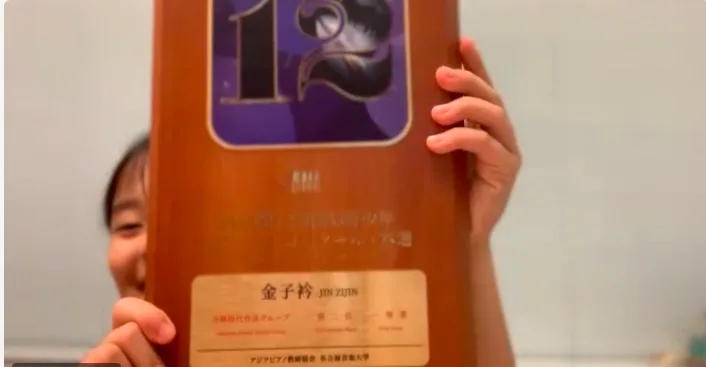
The children are free to tell me whatever they want: a favorite activity, a story, a personal achievement or a family outing. Sometimes they give me a new stuffed animal or a new game given to them by a parent.
They also tell me about their piano or swimming competition and show me their medal. It’s a real moment of exchange where they speak about what matters to them. It’s a moment for them developing confidence in speaking.
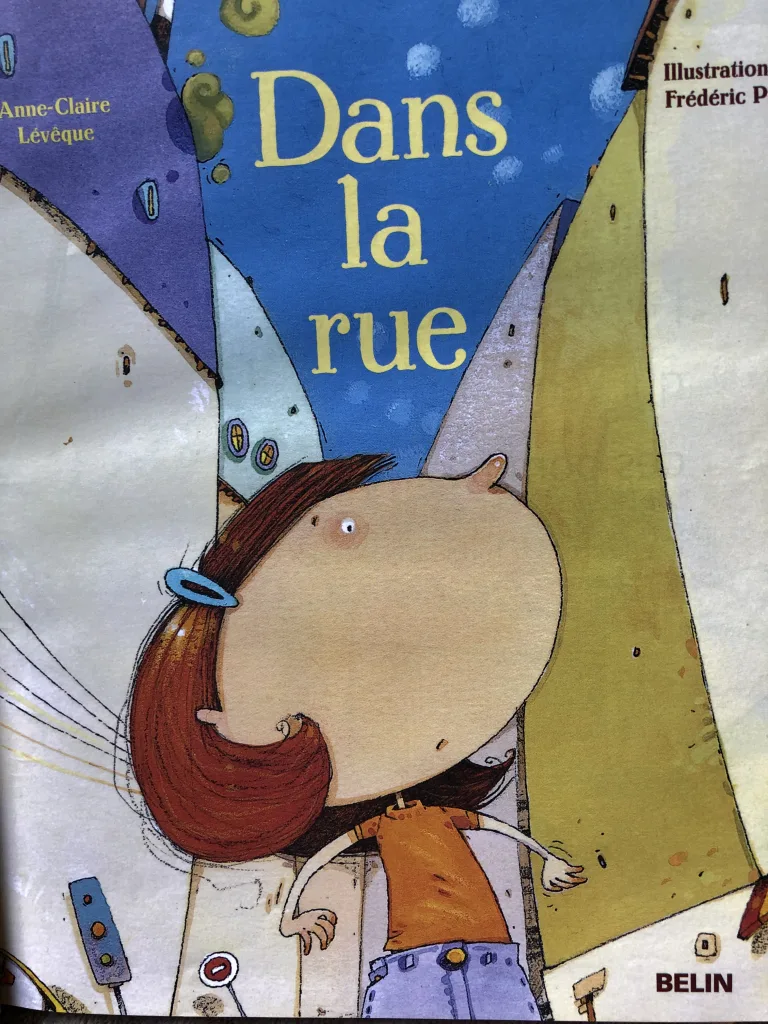
- 📚 Story time: weekly mini-stories or rhymes reinforce comprehension.
- ⭐ Closing ritual with emojis: children choose emojis to express how they feel at the end of class, building self-awareness and engagement.
The children took the initiative and got into the habit of ending with an emoji that we send to each other at the same time. To do this, we count to 3!
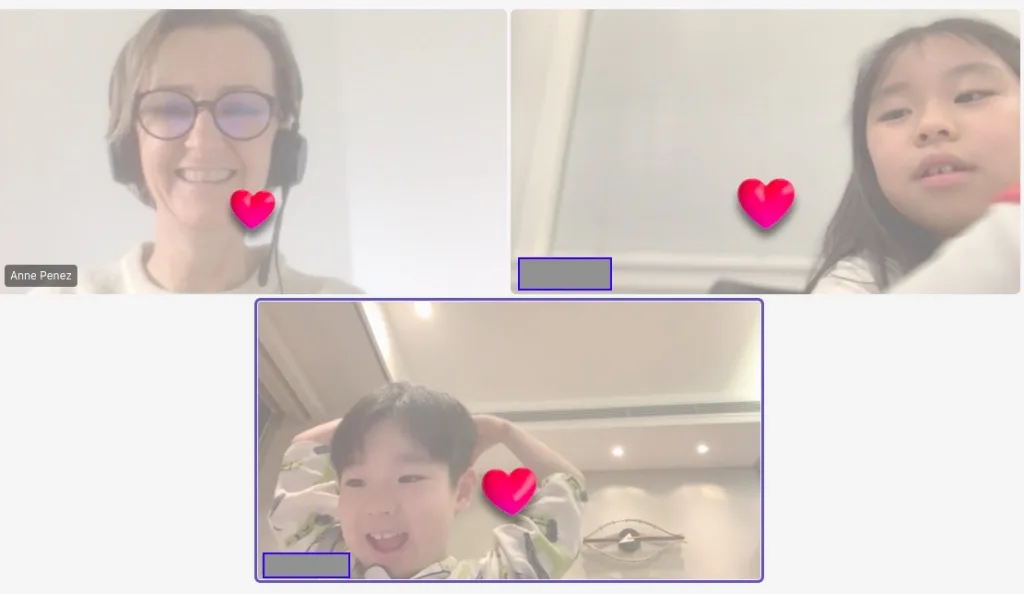
These rituals make lessons structured, joyful and memorable. Children recognize and look forward to them.
Rituals for children at home : how parents can help their child learning French language without speaking French
Parents have asked me how they can support their child’s French learning outside class because they don’t speak French at home.
Research shows that even 10–15 minutes of consistent, repeated exposure to a language each day significantly improves retention and confidence.
Rituals are an easy way ! Here are a few suggestions:
1. Connect to the rituals of their children to daily life
The good news is : parents don’t need to be fluent in French ! Even repeating a few simple words like merci, s’il te plaît, or numbers together builds familiarity and confidence. Children love to share what they’ve learned in class, so rituals at home become opportunities for them to teach their parents. It’s a powerful way to reinforce learning.
For example :
- Create a French corner at home with books, flashcards or drawings.
- Play a short French word game after or before the dinner.
- Repeat the same French song or rhyme in the car or before bed.
2. Use the rituals of your own family
- Say Bonjour and Bonsoir together every day.
- At snack time, repeat food vocabulary in French.
- During bedtime use a short bonne nuit ritual.
- On weekends, make a family tradition of watching a short French cartoon or singing a favorite French song.
These rituals don’t require extra time. They integrate naturally into daily routines, turning every moment into a mini French lesson. I will be happy to share with you some French song.
How rituals support motivation and long-term success in children learning French online
Rituals do more than make a single lesson easier, they build habits that support children’s success over time.
Children who follow structured routines in online French lessons often:
- Progress faster because they know what to expect and can focus on learning.
- Retain vocabulary and grammar longer thanks to repeated exposure.
- Develop independence by taking ownership of familiar activities.
In contrast, children without rituals may feel lost, less motivated, or anxious about what comes next. The difference is clear: structure gives them the confidence to explore French actively.
Personally, I established two rituals with my two daughters when they were little.
The first (which still exists when we’re together!) is sharing our day around dinner. Each of us has a moment to talk and listen.
The second is the traditional bedtime story. They would choose a book and I would read it to them in bed. Since there were two of them… there were two stories
In French learning online, rituals are not just routines. They are anchors of of learning helping children feel safe, engaged and ready to progress step by step.
Join The French Explorer School now ! Every week, children from different countries meet to learn French online together through games, songs, and rituals. Give your child the gift of fun learning !
 English
  Spanish
  Chinese