My recommendations of apps to help kids and teenagers learn a foreign language
If you’ve ever heard that the best time to learn a new language is during childhood, this is actually true. With the right online resources, children can make learning a new language look easy!
To make your life a bit easier, today I am sharing a list of 4 top apps for kids and teenagers.
Are you trying to get your child or your teenager to learn French? Using French Apps might be one of the best ways to introduce your kids to the French language.
1. Study Cat
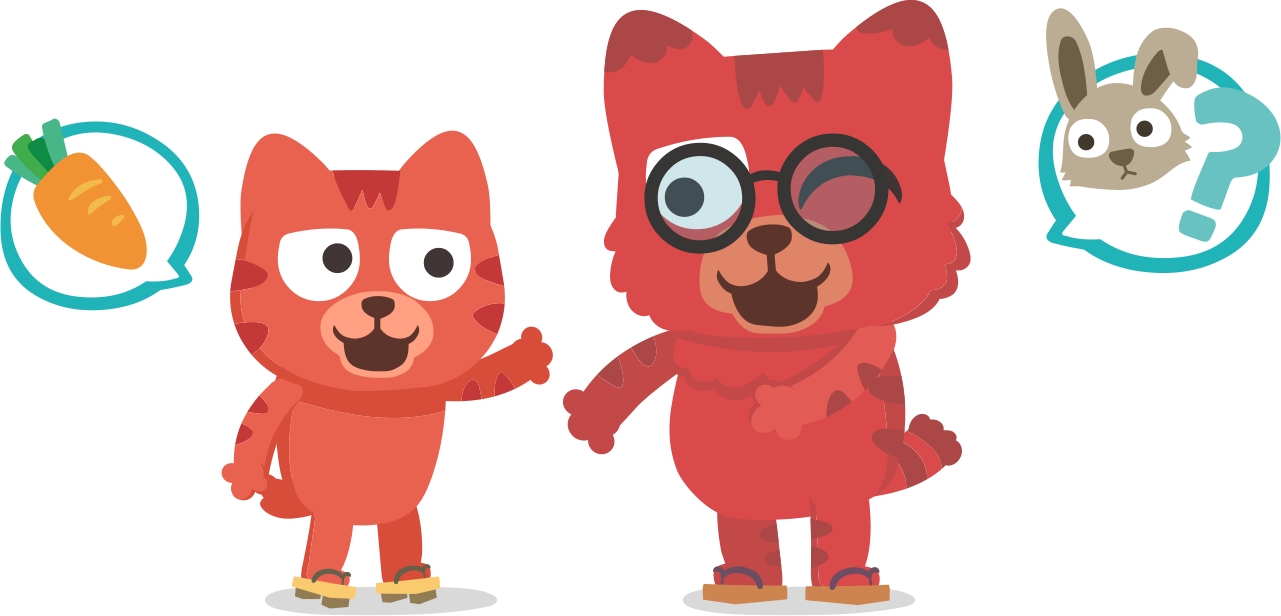
For kids between ages 6-8, Study Cat is an app that uses games to help children learn French. With bright colors and big buttons, kids can practice their pronunciation, reading and grammar.
2. Bayam
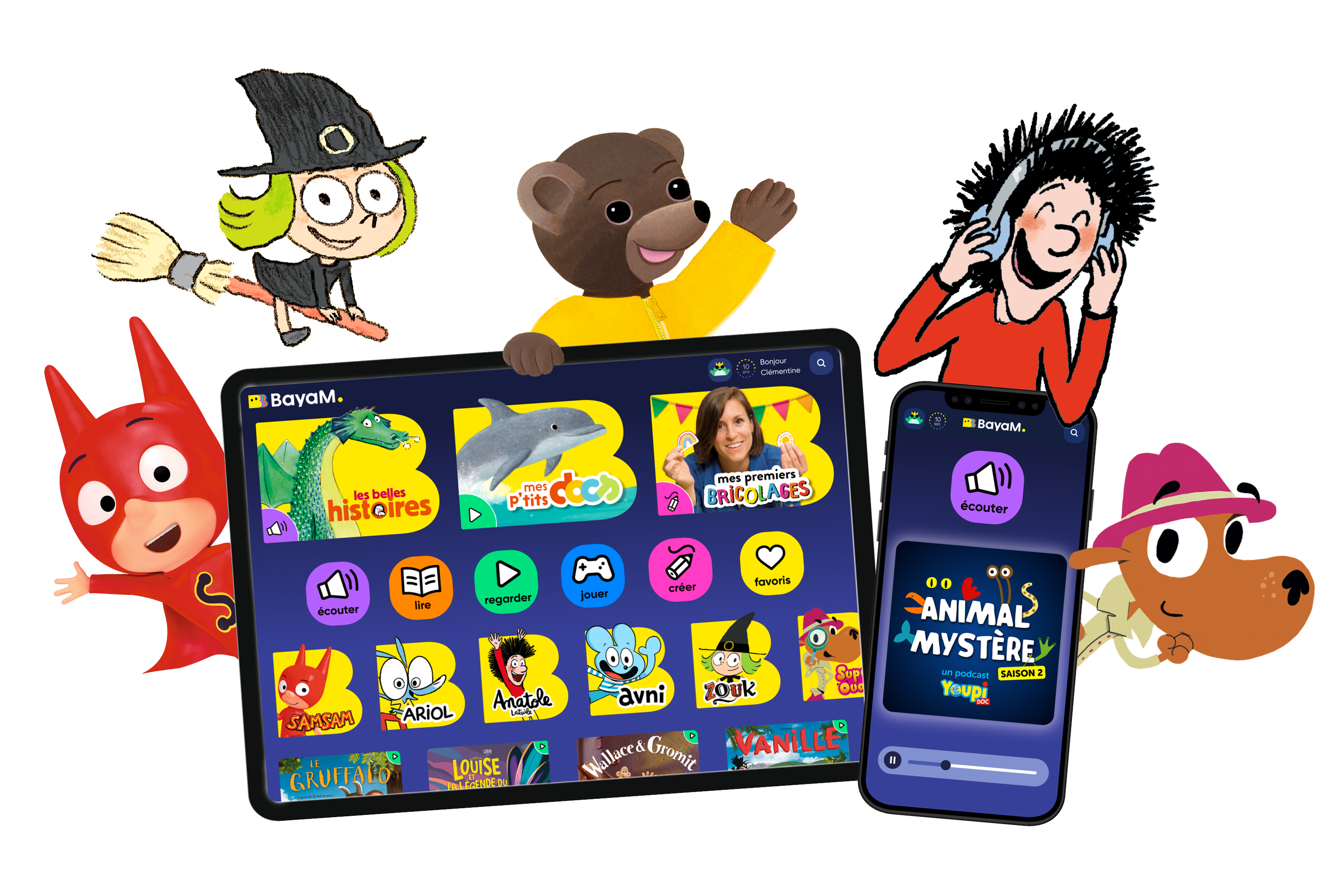
For children between 3-10 years, Bayam has a lot to offer. This app contains series, games, audios, stories and creative workshops for kids. Bayam is vibrant, colorful and contains animated characters so your child will enjoy it.
Bonus : the app is free ! Let’s go !
3. Boukili
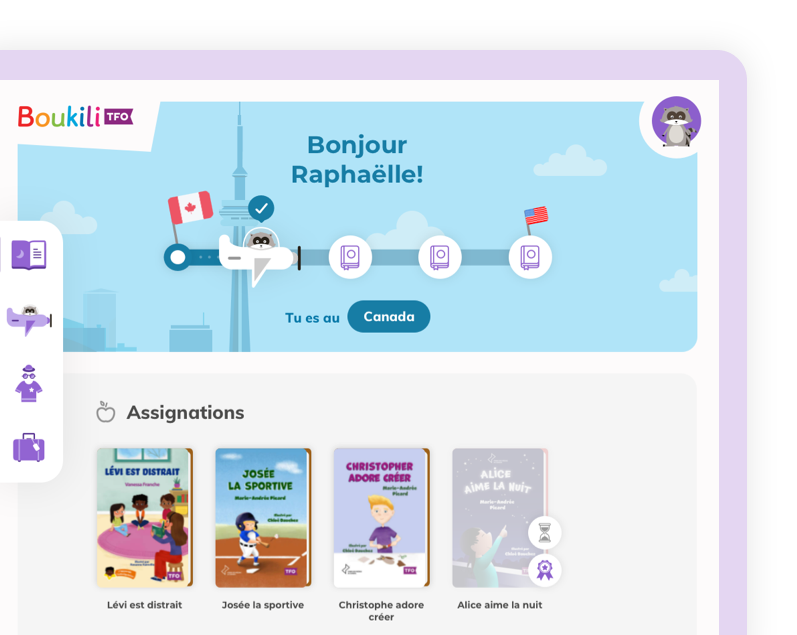
Boukili is an app for children over the age of 4. It focuses on French reading and consists of various illustrated children’s books. There are several levels : from 1 (the easiest, targetting the young readers) to 6 (the most difficult).
One of the best aspects of this app is that it allows parents to track their children’s reading progress.
The app is free and very easy to use !
4. Memrise
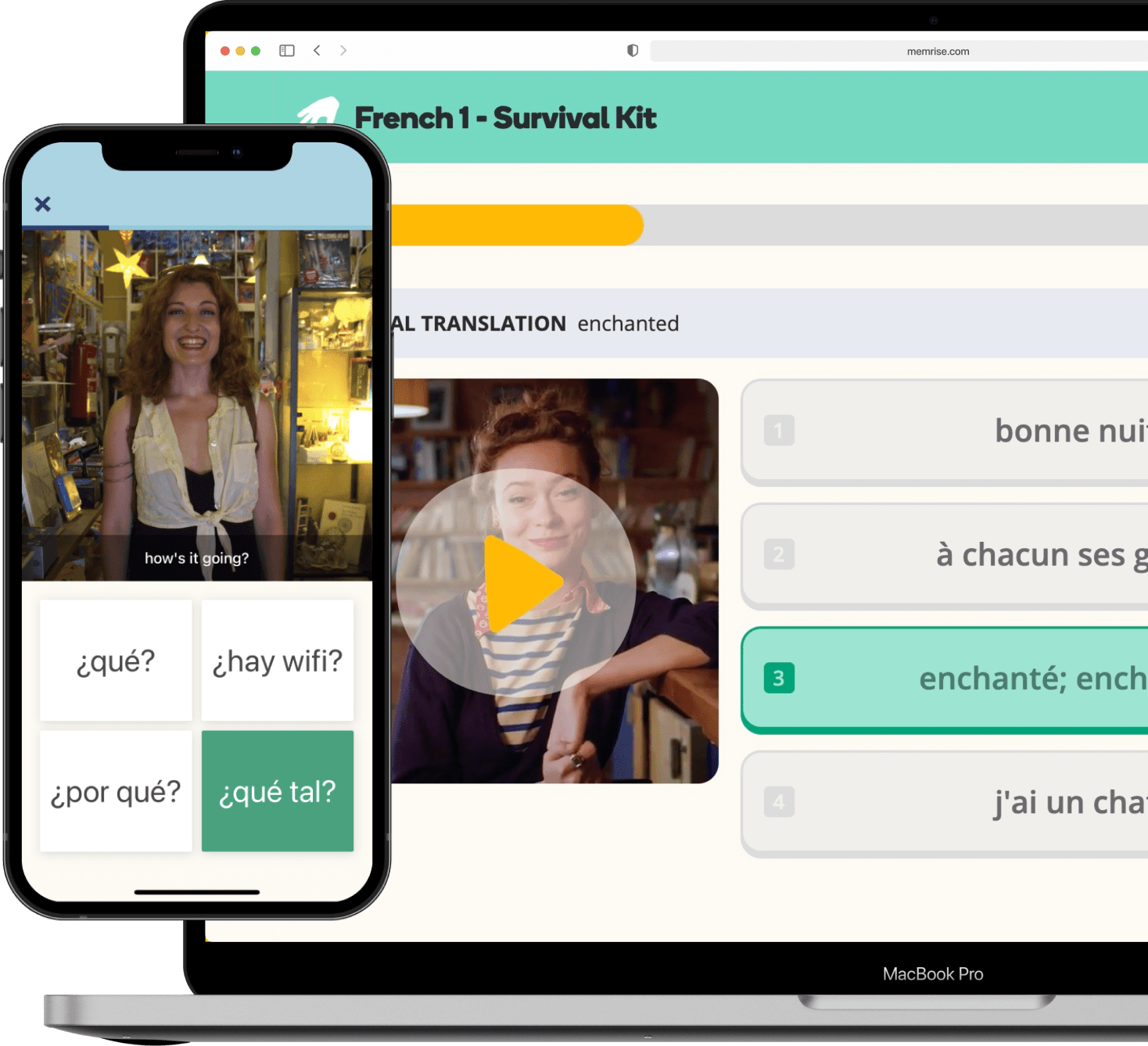
Memrise is an app which is often recommended by teachers because it is very useful for helping students to learn vocabulary. It uses digital flashcards to teach learners new words and phrases. The words are spoken out loud to help you learn the correct pronunciation. Memrise uses a spaced repetition technique so that the words you find most difficult are the ones that come up more often (for you to then memorize).
Memrise is recommended for those aged 12+. Because of the simplicity of the app, I think it is perfect for teenagers. There are various French levels starting from beginners.
Online resources are useful but …
Apps are a fantastic way to introduce your kids to the French language but you shouldn’t rely solely on apps to teach your kids French.
I explain to you why online resources are not enough in 6 points :
Online resources lack of human interaction and authentic communication
Learning a language requires real-life interactions with native speakers or other learners. Online resources, such as apps or videos, often offer little or no authentic interaction, which limits the development of spontaneity and fluency in conversation.
Apps and websites lack of immediate and personalized correction
Digital tools cannot always accurately detect and correct pronunciation, grammar, or syntax errors, especially in complex sentences. A teacher can adapt their explanations and correct errors based on the learner’s level and needs.
Difficulty acquiring correct pronunciation and intonation
French phonetics is particularly challenging for non-French speakers (e.g : nasal sounds, the guttural “r”, liaisons). Online resources don’t always allow for effective work on these aspects, unlike a course with a teacher who can guide the learner.
Lack of motivation and discipline
Online self-study requires a high level of discipline and constant motivation. However, many learners quickly give up due to the lack of follow-up and support. A course with a teacher provides structure and dynamics that encourage regularity.
Limited access to real-life and cultural situations.
Learning a language also means understanding the culture that accompanies it. Online resources don’t always allow you to experience cultural nuances, idiomatic expressions, and the social contexts in which certain phrases are used.
Lack of supervised writing practices.
Writing in French requires critical feedback to progress. Automatic correctors are limited and do not take into account the richness of writing styles or grammatical and lexical subtleties. A teacher is essential to effectively improve written expression.
Conclusion
Online resources can be a useful complement to their learning, but they cannot replace teacher-led learning and real-life interactions.
To truly master French, it is essential to have authentic interactions, personalized corrections, and immersion in the culture and language.
At The French Explorer School, I support children and teenagers regardless of their level in a relaxed and motivating atmosphere.
My teaching can be summed up in one word : pleasure.
 English
  Spanish
  Chinese