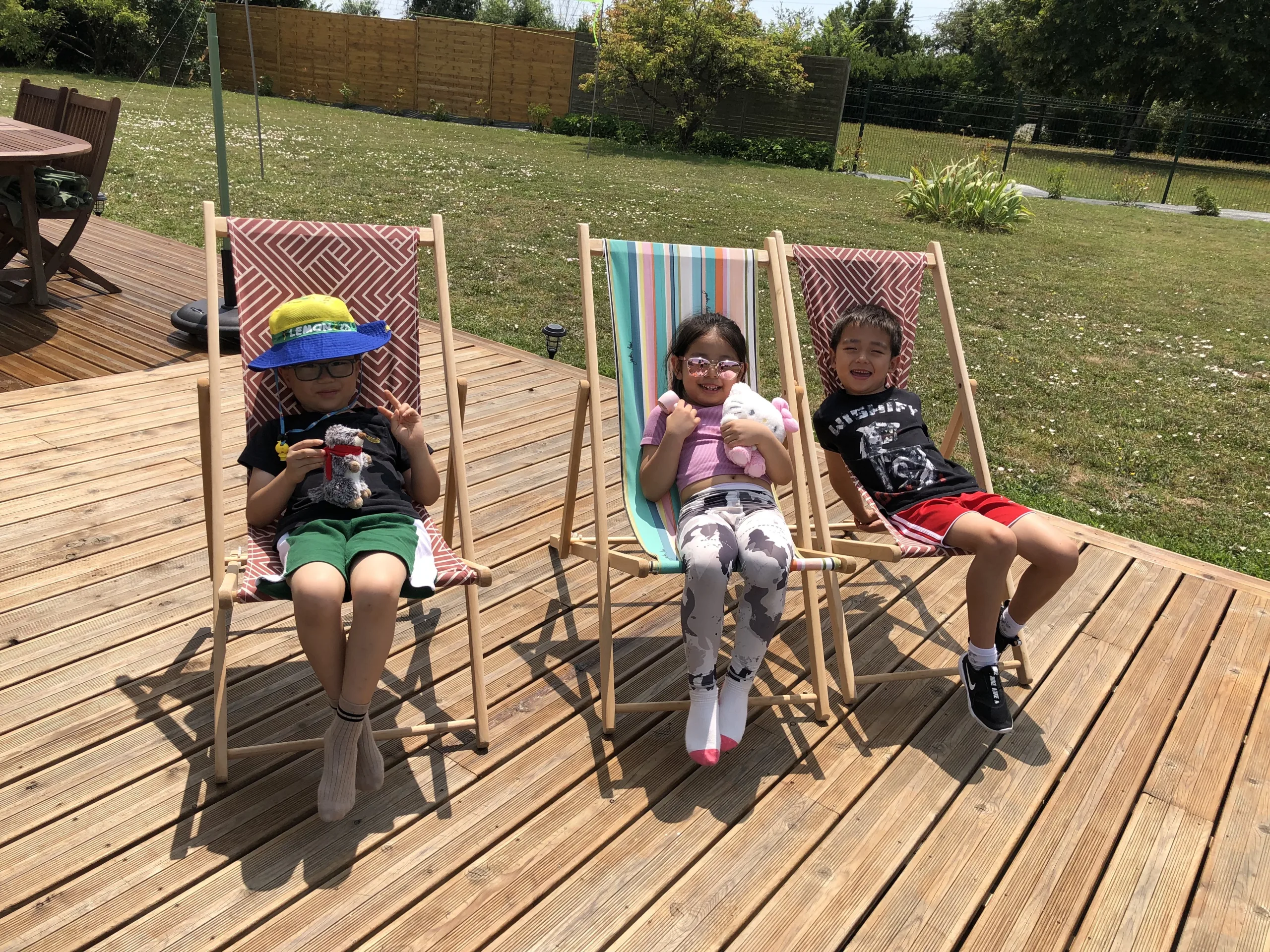
Every year, thousands of families search for the best way for their children to learn French over the summer. A French immersion summer camp can be a life changing experience but only if your child is truly ready for it.
Will they manage without me ? These are all completely understandable questions and I will answer every single one of them in this article. But I want to start with something more important: the one sign that, in my experience, matters more than all the others combined.
What most articles get wrong about “readiness” for a summer camp in France.
Most checklists you will find online focus on practical skills: can your child shower independently, make their bed, manage their belongings ? These things matter, of course. But after several years of welcoming children into my home in the Vendée for French immersion stays, I have learned something that no checklist will tell you.
The children who thrive are not necessarily the most independent, the most confident, or the most fluent in French. They are the ones who want to be there.
And the children who struggle regardless of their age, their level or their personality are the ones who don’t.
🎯 The real question to ask your child: not “do you think you’re ready?” but “do you actually want to go?”
The answer to that second question will tell you everything you need to know.
What motivation actually looks like and what it doesn’t
Motivation does not mean your child needs to be bursting with excitement, counting down the days on a calendar. It does not mean they have no nerves at all nerves before something new are completely normal and healthy.
What it does mean is that, when you talk to your child honestly about the stay, there is something in them that says yes. A curiosity. A willingness. A small spark of adventure, even if it comes with a little apprehension.
Ask your child directly:
“Would you like to spend a week in France, living with a French family, speaking French every day ?”
Listen not just to what they say, but to how they say it. A hesitant “I suppose so” from a naturally shy child can absolutely become a wonderful experience. A flat “no, I don’t want to go” especially if it is repeated deserves to be taken seriously.
A note on French level: immersion works for all children learning French
One of the most common worries parents raise with me is French level.
“Is their French good enough ?”
Whether your child is learning French as a foreign language at school or growing up in a bilingual family, the starting level simply does not matter here.
👉 Let me be very clear: At The French Family Camp, there is no minimum level required.
None at all.
Complete beginners are not just accepted, they are warmly welcomed. Immersion is in fact one of the most powerful environments precisely for children who are starting from scratch.
When you are surrounded by a living language all day, every day, something remarkable happens. The brain stops translating and starts absorbing. Progress that would take months in a classroom can happen in days.
So please: do not let French level be your deciding factor. Let motivation be your guide instead.
Shy children and French immersion: what parents need to know.
This is the question I am asked most often and my answer always surprises parents: shy children are often the ones who benefit the most from this kind of experience.
In a large camp environment, shy children can easily disappear into the background. In a small family setting with a maximum of four children per week, that simply cannot happen. Every child is seen, included and gently encouraged.
Shyness is not a barrier to immersion. It just means the environment needs to be safe, small and genuinely caring. That is exactly what we try to create every single week.
What about children who don’t know anyone at camp?
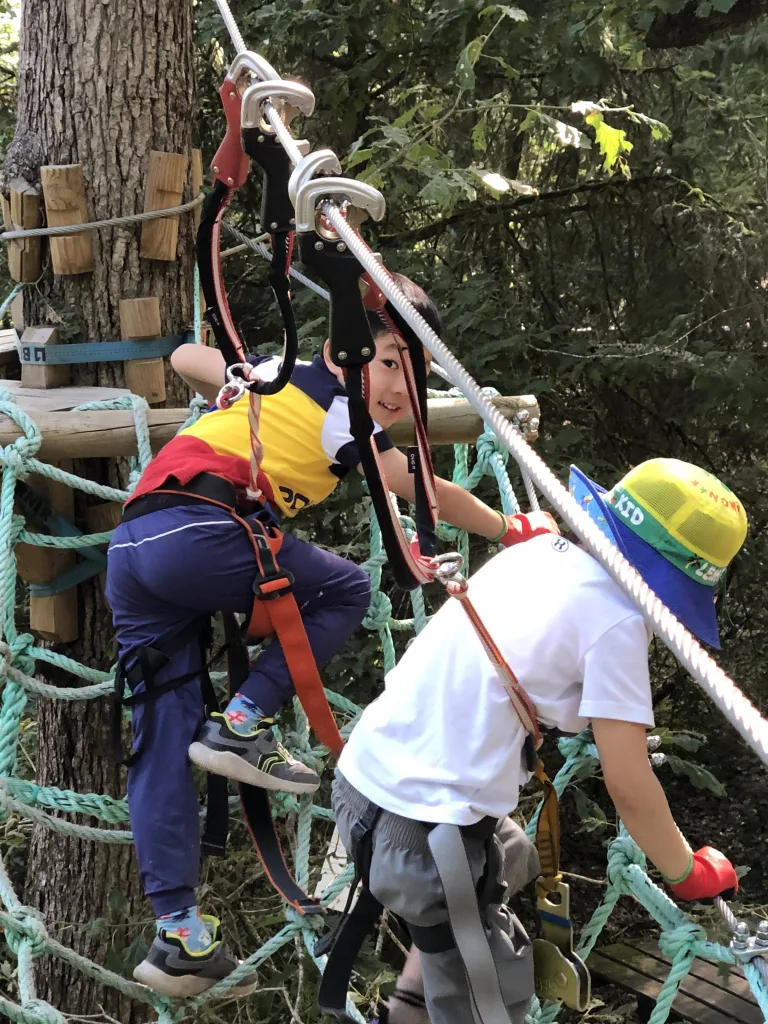
Some children arrive at The French Family Camp with a friend or a sibling and that familiar face can make all the difference in those first hours. Others come alone, not knowing anyone. And yes, for some of them, that thought can feel daunting at first. A mother told me recently that her daughter was hesitant to come precisely because she was afraid of being with children she didn’t know.
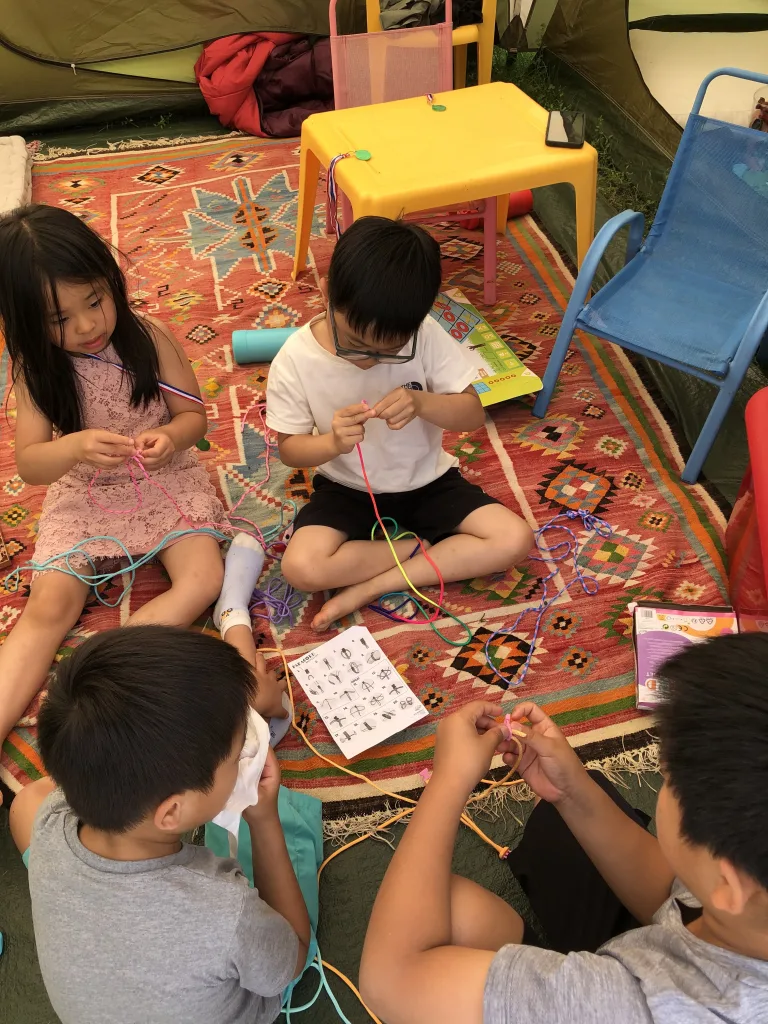
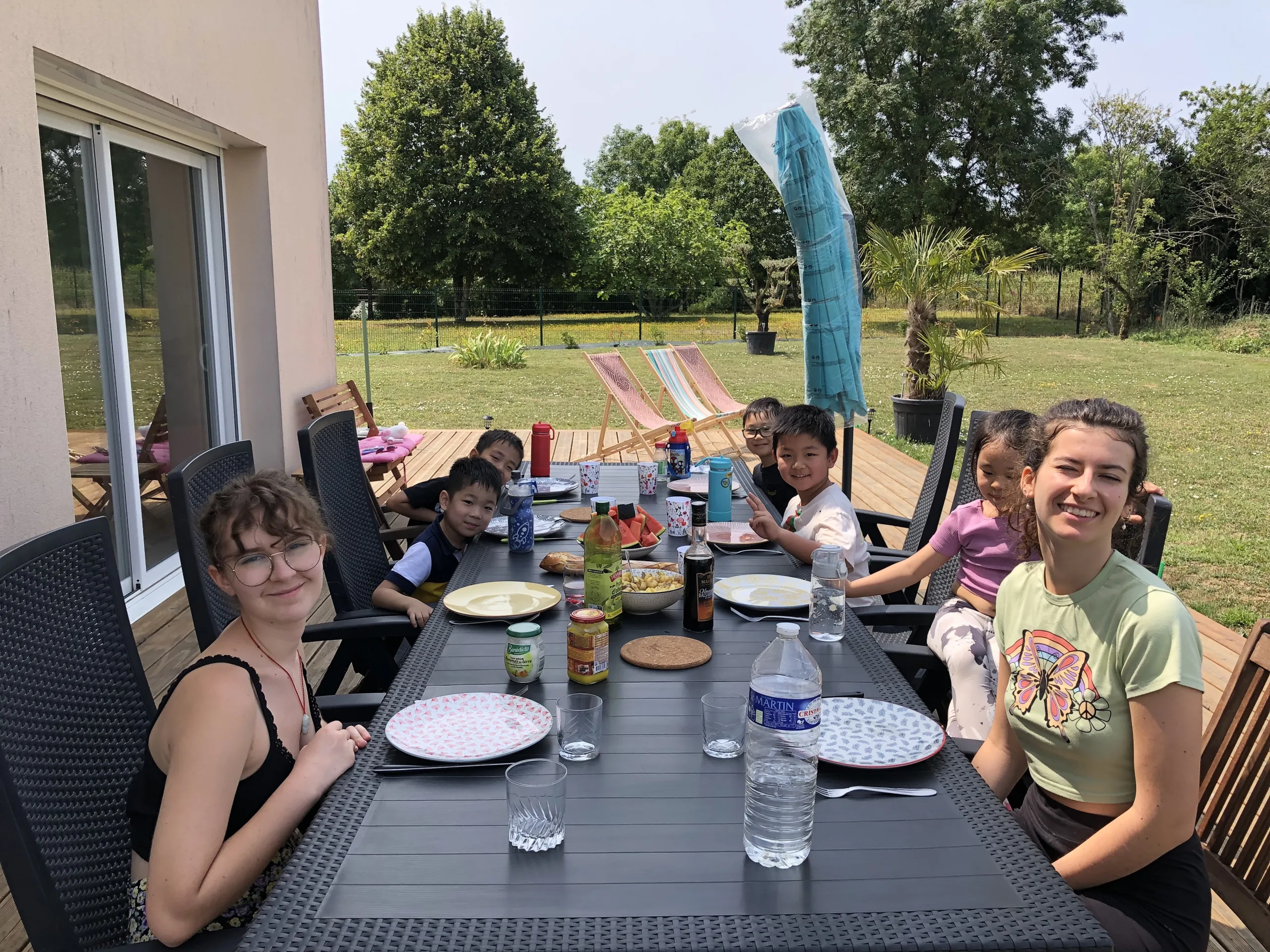
This is a completely understandable feeling. But here is what I have seen, again and again: within a day or two, the children who arrived as strangers become companions. Shared meals, games, creative projects and everyday life in French create bonds surprisingly quickly. In a group of four children maximum, no one stays a stranger for long.
Practical readiness for your child’s French family stay in France: what actually matters at The French Family Camp.
Basic autonomy for everyday life.
Children at The French Family Camp live as part of a real family. This is what makes a family immersion stay so different from a traditional French as a foreign language course : the language is never taught, it is simply lived.
This means there is no hotel service, no staff to manage their every need just warm, genuine family life. Children who can manage their basic personal care, organise their belongings and get themselves ready in the morning will naturally feel more confident from the start.
That said, I adapt to each child’s age and needs. For our youngest guests, children of 6 or 7, I am happy to help. The goal is never to leave a child feeling lost or overwhelmed. It is to help them feel capable, gradually and gently.
A healthy relationship with screens.
At The French Family Camp, screen time is managed carefully. Children have access to their phone or tablet once a day to call or message their parents. That is it. This is not a punishment; it is a deliberate choice that makes an enormous difference to how quickly children immerse themselves in family life, in French and in the experience around them.
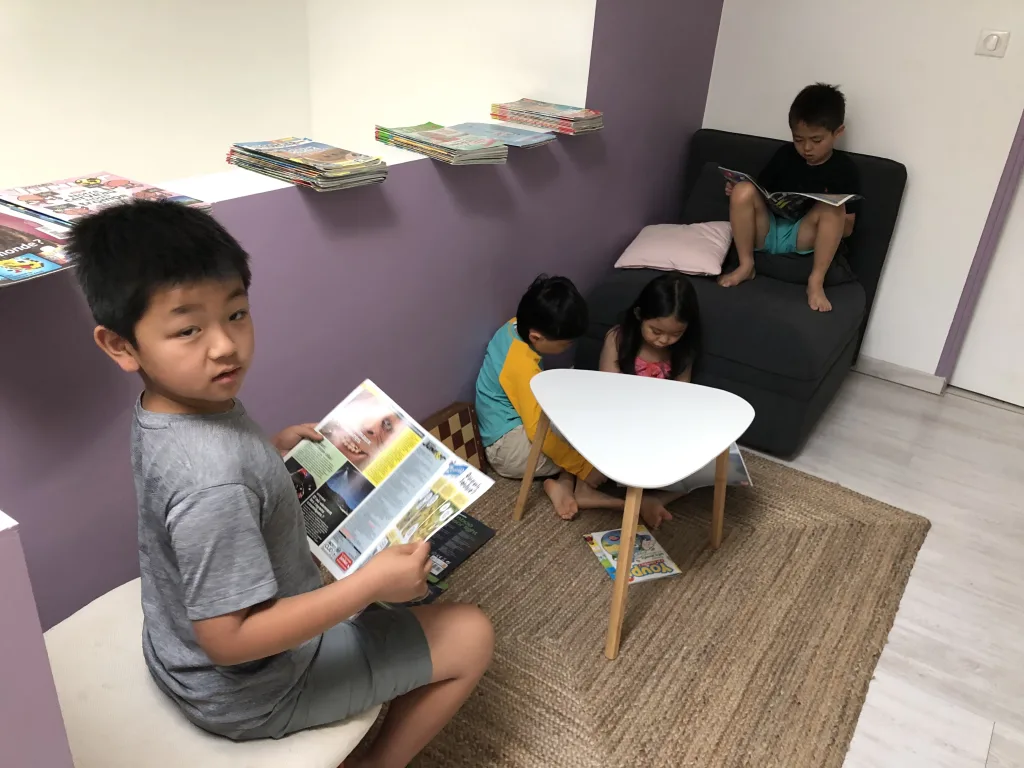
Most parents are relieved to hear this. A few are surprised. But almost all of them tell me afterwards that it was one of the best parts of the stay for their child and for themselves.
A word about behaviour and what parents really worry about.
Here is something that always makes me smile: the question I am asked most often by parents is not “will my child be happy ?” or “will they speak French ?”
It is: “I hope they won’t be too much trouble for you.”
Parents worry about their child’s behaviour whether they will be polite, respectful, easy to live with. I find this incredibly touching. It tells me a great deal about the families I work with.
So, is your child ready ?
Here is my honest answer, after years of welcoming children into my home in the Vendée: if your child is curious, willing, and somewhere inside them there is a small flame of excitement about the adventure ahead they are ready.
Their French level does not need to be perfect. They do not need to be fearless. They do not need to be the most independent child in the world. Language learning, like all learning, works best when children are motivated, when they are having fun, when they feel safe enough to try and free enough to make mistakes. When those conditions are in place, everything else follows.
The one thing I cannot work with the one thing no camp can work with is a child who truly does not want to be there. So before you book anything, have that honest conversation with your child. Listen to them. Trust what they tell you.
If the answer is yes even a quiet, slightly nervous yes then I would love to welcome them to The French Family Camp this summer.
Choosing the right summer camp is one of the most important decisions a parent can make when it comes to helping their child learn French in a meaningful and lasting way.
Want to find out more ?
Discover the full programme, available dates and all the practical details on the dedicated page of The French Explorer School.
 English
  Spanish
  Chinese