Is your non-native French-speaking child struggling with French ? They may be making frequent mistakes when speaking or writing. This isn’t a memory problem: they’re learning French alongside their native language and their brain is constantly adjusting, comparing and testing. In this article, I’ll explain how to support your bilingual child in their French learning, avoid frustrations and foster natural and effective progress.
Why is your child experiencing difficulties in French
It’s not a question of memory
When a bilingual child is learning French, it’s normal for them to make mistakes. Many foreign parents worry that their child “forgets what they were told” or “just can’t remember.” In reality, this is rarely a memory problem.
Your child is learning French alongside their native language, constantly comparing, testing and adjusting what they know and that takes time. Mistakes simply show that they are actively learning. Bilingualism even boosts certain cognitive skills and does not weaken the brain. In my article on the benefits of bilingualism for the brain, I explain how to effectively support your child in their French learning journey.
Mistakes don’t mean your child lacks ability, they are just part of the process of learning.
Native language influences common mistakes
Every language works differently. A non-French-speaking child doesn’t make mistakes randomly, they rely on what they already know.
For example:
- Some languages don’t use articles like “le” or “la“. A child who speaks Chinese might struggle with articles because they don’t exist the same way in Chinese.
- Other languages don’t distinguish between masculine and feminine. An English-speaking child may forget gender agreement, since English doesn’t use masculine and feminine like French does.
- In some languages, word order is different. An Arabic-speaking child may have trouble with word order or certain specific sounds.
Your child naturally applies the rules of their native language to French. This is a normal part of being bilingual. Understanding this completely changes how we view difficulties in French: instead of thinking “they’re not paying attention,” we see that they’re transferring rules from their first language.
Bilingual child or non-French-speaking child: Different needs
Not all bilingual children face the same challenges. A non-French-speaking child who speaks two languages at home but attends a French-speaking school will have different difficulties than a child who is encountering French for the first time. The first child hears French regularly at school. In the first case, the challenges may involve grammatical accuracy or vocabulary enrichment.
In the second, it often involves understanding the very structure of the French language: articles, conjugations, agreements, sounds. This is why support must be tailored to the child’s linguistic profile. A bilingual child does not progress linearly: they advance through successive adjustments. The same method cannot be applied to everyone.
The 5 main challenges for bilingual and non-French-speaking child
Articles (le, la, un, une…)
Articles are often one of the first challenges a non-French-speaking child faces. In some languages, like Chinese, definite and indefinite articles don’t exist in the same way as in French. In other languages, like English, articles exist but their use is simpler. In French, almost every noun needs an article.
We don’t just say “chat dort” (“cat sleeps”). We say “le chat dort” or “un chat dort”.
A child might say:
“Je vois chien.” (“I see dog.”)
“Le maman arrive.” (“The mom is coming.”)
“Un soleil est chaud.” (“A sun is hot.”)
These mistakes don’t mean your child doesn’t understand.
They simply show that they haven’t yet automated a grammar rule that doesn’t necessarily exist in their native language.
💡 What this means for parents:
Your child needs to internalize a new grammatical habit. This happens through repeated exposure to correct sentences in natural contexts: stories, songs and movies.
The goal isn’t to correct every sentence but to reformulate naturally so your child hears the correct model.
Gender and agreement
Grammatical gender is often one of the most confusing aspects for a non-French-speaking child.
In many languages, objects don’t have masculine or feminine forms.
For a child, it can seem strange that a table is feminine while a book is masculine.
A child might say:
- “le maison” (“the house”)
- “la chien” (“the dog”)
- “la voiture rouge est beau” (“the red car is beautiful”)
These kinds of mistakes are very common for children whose native language doesn’t use grammatical gender.
What’s important to understand is that the child is learning two things at once:
- The gender of the noun.
- The agreement of adjectives or past participles.
This is a double cognitive load.
💡 For parents:
It’s more effective to focus first on the correct article (“la maison”), then gradually introduce agreements.
Automation comes with time and regular exposure to the language, not through mechanical repetition.
Verb conjugation and tenses
The French verb system is rich: present, passé composé, imparfait, future…
And each tense has its own endings. In some languages, verbs barely change. In others, the past tense is formed differently.
A child might say:
“Hier je vais au parc.” (“Yesterday I go to the park.”)
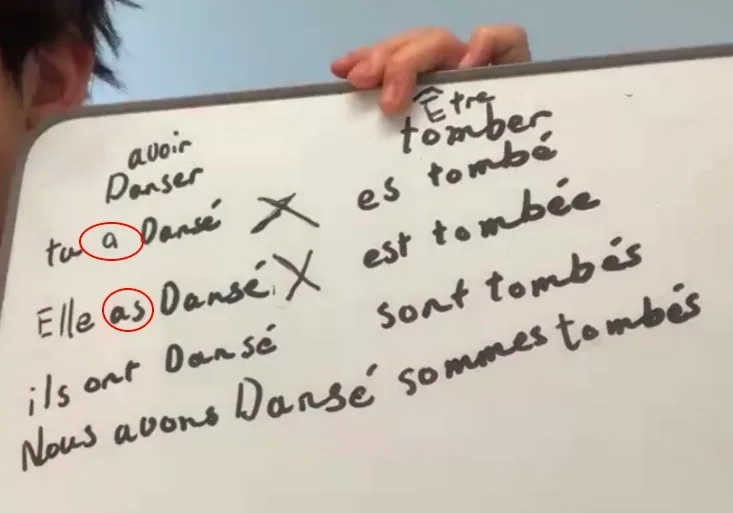
“J’ai tombé.” (“I fell.”)
“Il prendé.” (“He taked.”)

They understand the meaning of past or present, but haven’t mastered the exact form yet.
It’s important to know that conjugation requires a high level of abstraction.
For a bilingual child whose native language isn’t French, this takes time.
💡 For parents:
The key is to encourage your child to speak confidently.
Grammatical accuracy comes gradually.
Correcting every mistake can undermine confidence.
Natural reformulation is often more effective.
Word order and sentence structure
Not all languages organize sentences the same way. In French, the usual order is: Subject + Verb + Object.

But in some languages, adjectives come before the noun.
In others, the verb may appear at the end of the sentence.
A non-French-speaking child might then produce sentences like
“Moi veux gâteau.” (“Me want cake.”)
“La rouge voiture.” (“The red car.”)
“Hier au parc je allé.” (“Yesterday at the park I went.”)
This isn’t a lack of logic.
They are simply applying the structure of their native language.
Reorganizing a sentence according to a new pattern takes time because it requires rewiring a pattern already established in the brain.
💡 For parents:
Encourage your child to express themselves freely.
Sentence structure strengthens through regular exposure to correct sentences: reading, conversations and stories.
Specific French sounds
French has sounds that don’t exist in every language:
The “u” sound → [y] (comme dans lune [lyn]
The guttural “r” guttural → [ʁ] (comme dans rue [ʁy])
Nasal vowels like “on” → [ɔ̃] (comme dans nom [nɔ̃]) or “an” / “am” → [ɑ̃] (comme dans maman [mamɑ̃]) or “in” / “im” / “yn” / “ym” → [ɛ̃] (comme dans pain [pɛ̃])
A child may hear the difference but not be able to reproduce it immediately.
For example:
“lune” becomes “loune”
“rue” becomes “lue”
“pain” becomes “pan”
Pronunciation also depends on the sounds present in the child’s native language.
If a sound doesn’t exist in their first language, the brain has to learn to distinguish and produce it.
💡 For parents:
Pronunciation improves through repeated listening and playful sound activities.
The goal isn’t perfection but gradual practice and encouragement.
How to help your child progress in French at home
Encourage your child to speak
A non-French-speaking child needs confidence to make progress.
Even if you don’t speak French yourself, your role is still essential: you can encourage, listen, and celebrate their efforts. Every word spoken in French is a small victory.
The most important thing is that your child feels confident enough to express themselves.
If you don’t speak French, rely on trusted resources: audio books, specialized teachers or age-appropriate content.
Your supportive and positive attitude is already a valuable form of help.
I see my students’ progress when parents are involved: they encourage and motivate them by offering activities in French, listening to songs or watching films with them. It’s important that your child doesn’t feel alone with this foreign language. Explaining why they’re learning it is also fundamental to strengthening their motivation.
Regularly expose your child to French
Regular exposure is key. The more a child hears French, the more their brain becomes familiar with structures, agreements and sounds.
This can include:
📚 Age-appropriate French books
🎧 Audio books
🎬 Cartoons or films in French
🎵 Songs
🎙️ Children’s podcasts
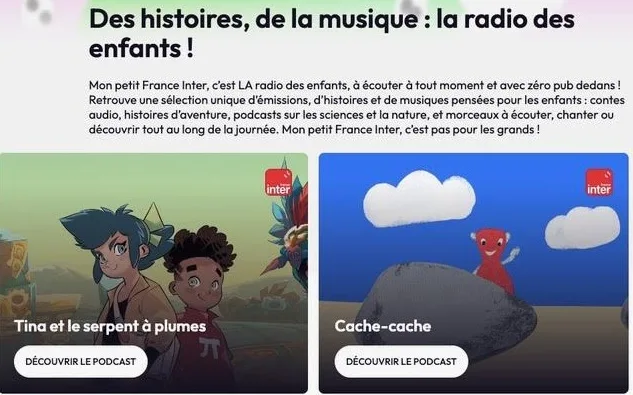
For example, the podcast Mon Petit France Inter offers short and accessible content, allowing children to hear natural, clear French.
The goal isn’t to add pressure, but to integrate French into everyday life.
You can also explore educational apps specially designed to help children learn French in a playful way. See my article on the best apps here.
Establish simple, regular routines
Consistency is more effective than occasional long sessions.
Just a small moment in French each day (10–15 minutes) is enough to create lasting habits.
📖 Listen a story in the evening
🎵 早上或玩耍时听歌
🎬 周末看个小动画
这些日常惯例会让您的孩子感到安全,并在没有压力的情况下巩固学习。.
我在我的文章中更详细地解释了这些习惯的重要性,该文章在 法国家庭仪式.
耐心点,庆祝进步
学习语言并非一个循序渐进的过程。有时您的孩子会显得停滞不前,有时又会突然茅塞顿开。.
庆祝
🗣️ 一个完整的句子
📚 正确使用的冠词
🎵 发音更准确的声音
法语的进步取决于重复、自信和时间。.
对于双语儿童或非法语儿童来说,法语方面的困难是正常的。.
它们与孩子的母语以及双语发展的自然过程有关。.
区别在于:
🔄 定期暴露
🏡 一个支持性的环境
🎯 量身定制的指导,符合您孩子的语言能力
作为一名专门支持多语种儿童的教师,我会根据每位学生的母语来调整我的教学。.
了解错误的根源有助于预见障碍,并支持您的孩子自信地进步。.
如果您希望为您的孩子提供个性化支持,您可以探索我的在线课程和 沉浸式课程 在我的网站上。.
携手并进,我们能将困难转化为进步的真正机遇。.