
“To learn a language is to have one more window from which to look at the world.“
– Chinese proverb
Around 3.3 billion people worldwide, which is about 43% of the global population, are bilingual. Speaking multiple languages is not rare; it’s a common and valuable skill that enhances the brain at any age. Encouraging your child to learn French or another language gives them a head start in this widespread human ability.
Cognitive flexibility: how bilingual children adapt faster
Bilingual individuals constantly switch between languages, improving adaptability and mental agility. They are better at multitasking and adjusting quickly to new situations.
According to the article form the National Library of Medicine : “Language co-activation is so automatic that people consider words in both languages even without overt similarity. For example, when Chinese-English bilingual people judge how alike two English words are in meaning, their brain responses are affected by whether or not the Chinese translations of those words are written similarly. Even though the task does not require the bilingual people to engage their Chinese, they do so anyway.”
Françoise Dolto, child psychoanalyst, explained : “When everything goes well, bilingualism is undeniably a plus for intellectual development. A child who receives bilingual education generally has better academic results because of highly developed intellectual abilities, exactly those required at school.”

Code-switching : a natural tool for expressing ideas
In my French classes, students often use code-switching : when they don’t know a word in French, they borrow one from another language to continue expressing ideas. Far from being a weakness, this is a strength. It prevents them from getting “stuck” and allows fluid communication, keeping motivation high. Over time, they naturally replace missing words with French vocabulary.
One day, un student asked me.
- “Je peux drink ?”
Another told me about the game she had played at school.
- “J’ai joué avec une ball“
The most important is too keep the communication. Children aren’t afraid of making mistakes and don’t get stuck if they forget a word in French. They draw on their cognitive reserves and find the solution by combining two languages. For them, the most important thing is to get a message across, to communicate. They’ve got it all figured out!
To go deeper, watch this video resource : Why bilingualism is good for the brain ? on YouTube
Memory and multilingual learning : strengthening working memory
Bilingualism strengthens working memory, essential for learning, problem-solving, and retaining information.
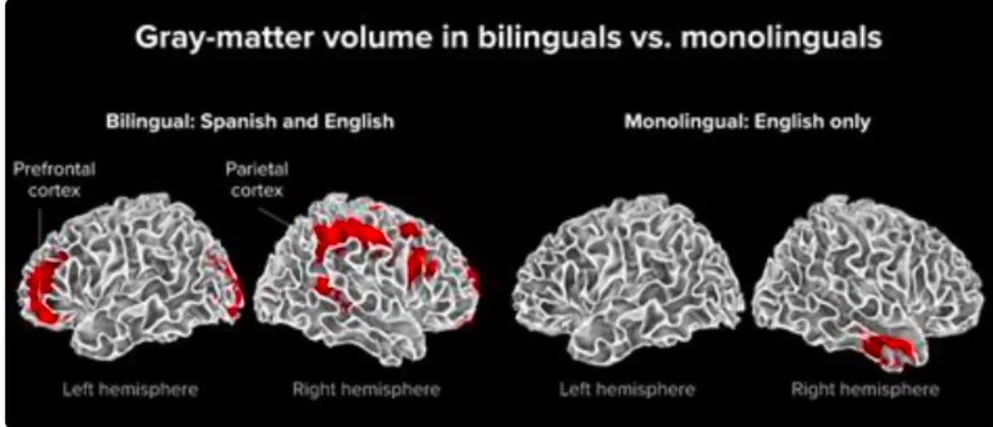
Studies show that bilingual children often outperform monolingual peers in reading, memory, and problem-solving tasks. By learning and switching between languages, they develop stronger working memory, which helps them concentrate better and retain information more effectively.
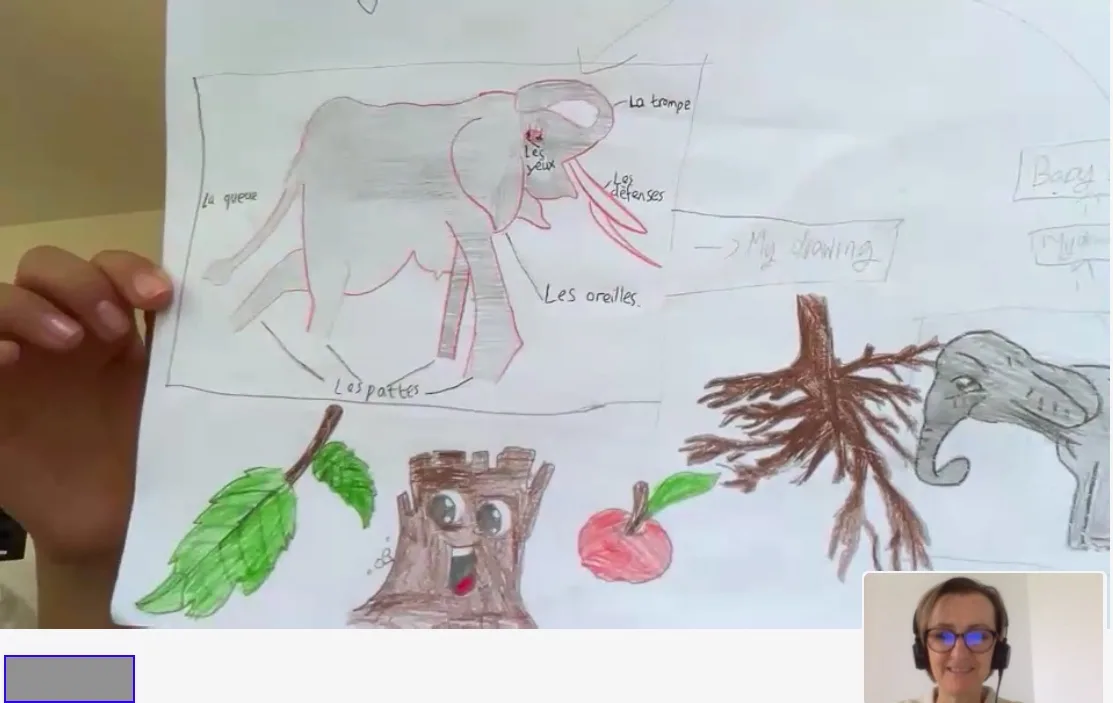
Many of my 8-year-old students speak three languages. Some began French at age 3. It’s incredible to see them juggle several languages so naturally and help each other understand by switching languages when needed.
Discover our online French classes for kidsBrain resilience and lifelong brain booster : a few of the positive effects of bilingualism
Speaking multiple languages helps preserve cognitive functions as we age. Research published in Neurology show that bilingual patients developed dementia 4.5 years later than monolingual ones. Bilingualism can delay the onset of Alzheimer’s disease.
For children, learning languages early builds a lifelong cognitive reserve. This gives them a long-term advantage academically and in everyday life.
Bilingualism is much more than a linguistic advantage : it shapes a brain that is efficient, adaptable, and resilient. Encouraging your child to learn a second or third language, such as French, gives them a lasting cognitive edge.
As Nelson Mandela said: “If you talk to a man in a language he understands, that goes to his head. If you talk to him in his own language, that goes to his heart.”
Bilingualism enhance problem-solving skills
Bilingual individuals constantly navigate between different linguistic and cultural structures, strengthening creative thinking and problem-solving abilities.
In class, children often find original ways to explain ideas when they lack a word in French, using gestures, synonyms, drawing or another language. This flexibility is a skill that benefits them throughout life.
My family experience with multilingualism
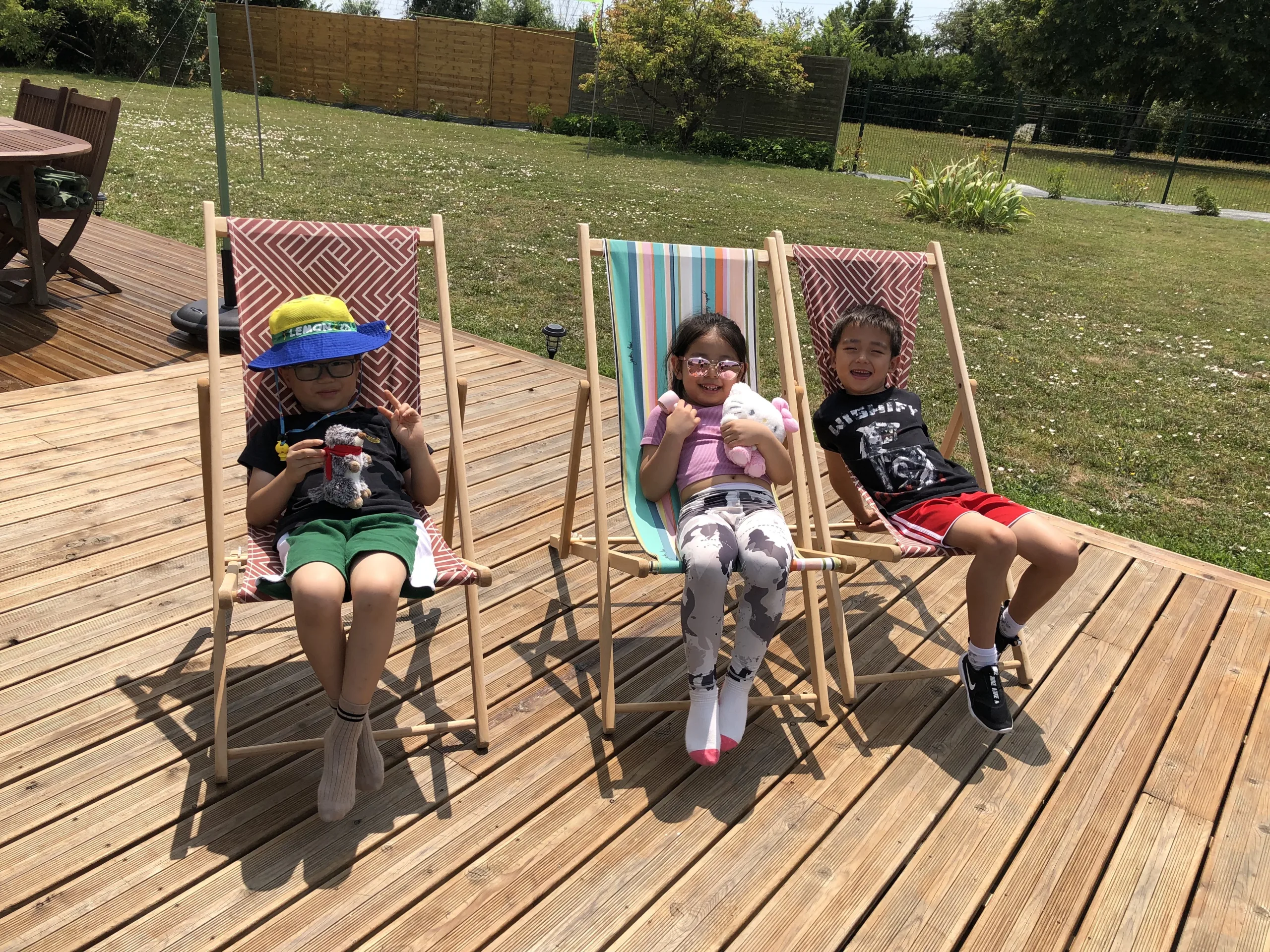
I’ve always believed bilingualism and multilingualism are a treasure for life. It’s the gift I wanted to give my daughters
When they were 2 and 4, we moved to Tunisia where they began learning French, English, and Arabic. Later, in China (Chengdu and Shenzhen), they added Mandarin.
Today, Angèle studies fine arts in Spain, while Anaëlle studies film in Paris at an international school and dreams of an international career.
There’s no doubt that growing up trilingual boosted their learning abilities, stimulated their brains, and opened countless opportunities. We are truly a multilingual family and proud of it!
This multilingual journey is not just theoretical, it is part of my own family’s story. When my daughter Angèle graduated from Shekou International School with her IB diploma, it was a proud moment that reflected the strong impact of multilingual education in her life.

French philosopher Michel Serres wrote in Atlas (1996) : “Bilingualism is excellent. The more means of expression a child possesses, the better adapted they will be to an era of international exchanges.”
Bilingualism gives greater focus and attention control to children
Bilingual brains train to filter distractions by constantly selecting the correct language.
In my online French classes, I notice bilingual children can focus longer and stay on task despite background noise or screen distractions. This ability to concentrate helps them progress faster in learning and gives a clear academic edge.
So, why not start today ? Book a disovery call right now and uncover the benefits of multilingualism for your child with The French Explorer School !

 English
  Spanish
  Chinese
1 thought on “Bilingualism is good for the brain : why it benefits children and adults”
Comments are closed.